
Life cycles18 min read
The Saturn return: why the late twenties remake a life
The Saturn return, near 28 to 30 and again near 57 to 60, is when a life is asked to take its lasting form. What it is, when it comes, and how Bowie, Jobs and others met it.
 By Abeer Desai
We exchange a great dim possibility for a small hard reality.
The Saturn return is the passage, around the ages of 28 to 30 and again near 57 to 60, when the planet Saturn completes its 29.5-year orbit and comes back to the place it held at a person's birth. In archetypal cosmology it marks the moment a life is asked to take its lasting form. Saturn is the principle of limit, structure and time, and at its return that principle comes due: potential must pass through commitment and consequence to become real. It lasts a season of two to three years rather than a lifetime, and what is built in it tends to carry the decades that follow.
In 1976 David Bowie left Los Angeles behind and settled in West Berlin. He was 29 years of age and went with Iggy Pop to sober up and get some breathing room. That summer his Saturn return was in tight orb: Saturn had come back to the place in the sky it held on the day he was born. Within a year he had made two foundational albums, Low and "Heroes", that are still counted among the most influential work of his life.
The Saturn return is a crucial passage in every human life, one that negates who a person has been while forging who they are about to become. A seed must push through the earth to become a shoot; in the same way, a life near thirty passes through a narrow doorway that strips it down to its essence, leaving only what is solid, the bones of a life, on which the next era is built. The experience of negation is not a condemnation of how a person has lived, but a necessary rite of passage, as the clock turns, the season changes, and youth prepares to uphold the sky of society in midlife.
A founder's Saturn return
By the time I turned 29, I had been taking Richard Tarnas’ graduate classes at CIIS for a few years. Tarnas, the author of Cosmos and Psyche, was himself a “Saturnian” figure for me: someone who, I felt, was at once a critique of my way of being and a template on which to build a new foundation. This critique was never something Tarnas consciously intended — by every measure he was a caring, creative, and passionate professor of history and psychology. And yet in him I met someone who had plainly devoted his life to a work of great passion and courage, exploring a deep mystery at the heart of human experience: enshrined in his emerging field of Archetypal Cosmology.
The quality of Saturn is something that simultaneously negates, while forging. Think of pouring yourself a cup of tea. The tea takes on the shape of the container it is poured into. That container simultaneously negates any other possible form the tea could have taken, while giving it the one form it will hold from then on.
The archetype of Saturn took on a particular importance for me. I had rejected the rigid world of New York finance to chart a more bohemian, creative path, and at times I fell into energetic ruts. Thus, Tarnas reflected to me what an authoritative creative actually looked like, and I took it upon myself to pursue the path he had laid out.
The year I turned 29, I recall compressing my life into essentially the size of the room I inhabited in my parents’ home. I had to decline the wedding invitations of five friends, all of whom got married that same year in various parts of the world. Determined to find a creative foundation where Tarnas’ work met my undergraduate background in business and social entrepreneurship, I came to see Archetypal Cosmology as the answer to Peter Thiel’s classic question: “What important truth do very few people agree with you on?”1
That planetary alignments showed a verifiable correlation with world history seemed to me the biggest discovery (or re-discovery) of the 21st century. I dove deep into Tarnas’ research, and into the work of his own mentor and my professor, Dr. Stanislav Grof, guided as well by the Professor of Religious Studies, Christopher Bache. Alongside these influences, I took a deep interest in the work and life of Coco Chanel. And I rounded it out by spending most of a year watching little but videos of Elon Musk speaking on his analytical approach to creative disruption.
In that way, I had created a cocoon for myself of authoritative figures who reflected the person I was, the person I wanted to become, and the person I was not yet.
Inspired by my emerging studies of Saturn, given that my Saturn return was arriving, I felt that I should concretize this moment into the foundation of my life, and so on March 16, 2016, a few days after my 29th birthday, I founded Numinous Realm. At the time I had taken a leave of absence from CIIS and was considering dropping out, while also starting a new career as an abstract painter inspired by the New York School of abstract expressionism.
Thus, although my Saturn return was something I intentionally participated in through my encounter with Tarnas, it was also a time I was forced to “meet the challenge” of who I was to become, or fail to do so. Coming out of undergrad at NYU Stern, I had believed myself to be some brilliant bohemian revolutionary—even being mentored by the great Indian tycoon, Dr. Sudarshan Maini for a year while living between a tribal village in Nagarhole, South India, and Maini’s penthouse in Bangalore. And yet the material world showed little evidence of it beyond my own experiences. This is what the Saturn return indicated to me: that I had to make real the vision I held of who I was. Time was passing, and I was no longer allowed to be just a reckless young person anymore. I was born with the Sun and Saturn in a square, and for a Sun–Saturn person that lesson is written into the chart itself: independence is never simply given, it has to be earned. Having observed my wife Somya Desai’s own Saturn return first-hand, I have found it miraculous to see the same Saturnian dynamic refract through her own encounters with her natal archetypes of Moon and Venus.
I held a job at my father’s company that felt very much like a false path for me, even though it gave me the foundation I needed to live. It’s what I stepped away from during my return. There were also many friends who had taken a safer, more predictable path out of NYU and continued to get reliable promotions in banking and business. When I look back at the journey from then till now (I’m 39 as I write this), I am amazed at all I’ve been through, and at how neatly, psychologically, that Saturn return marked a rite of passage: a threshold before which lay a different era. Many of the friends I made during this time challenged me as well, negating aspects that had run their course and supporting aspects that needed to be strengthened for what came next.
What does Saturn represent?
Saturn is the skeleton of life. It is the dry structure, which is essential to any system, and yet in itself can fall into meaninglessness if not married to a valuable aspiration. Saturn is the athlete who shows up every day to train, regardless of whether they feel like it. Saturn is the wisdom encouraging us to love the journey, not the destination. Saturn is the ticking of the clock, which marks everything, yet in and of itself is ultimately empty. Saturn is discipline, devotion, and dedication. It is the craft honed with patience and diligence over a long period of time. Saturn is the guidance we seek from those who have walked before and the wisdom of timeless lessons learned.
Saturn is the birthright of each and every one of us. We earn for ourselves the lessons that shape us. The shape we carry transforms the world we move through. In that sense, Saturn is karma, the past, which persists into the present until it is met by the presence of something equally real.
Saturn can be painful. It involves loss and grief, but these endings are also the necessary harbingers of the emergence of new life. We see Saturn in the falling leaves of autumn, which prepare the tree for winter and coat the ground in what ultimately becomes mulch for the next generation.
Saturn is timeless and time-bound. It is the paradox of life, which seems to involve what the Buddha called suffering. And yet, in some deep way, we know that without the passing of time, there would be no space for life itself to exist in the present moment.
What the return asks
Tarnas spent decades setting the Saturn cycle against hundreds of biographies. In Cosmos and Psyche he named the first return a period of "biographical crystallization"2: the years in which the structure of a mature life sets. The decades that follow are very often shaped by what was decided between 28 and 30.
He saw two ways through. Some people leave the return more rigid and more afraid, settled into the safe version of themselves, while others do the harder thing: they keep the hunger of their youth and give it a structure strong enough to carry it. He records the cost of the passage too. The four Beatles drifted apart during their returns3, and the shared creative current of the band ended as each man took up a separate adult life, a reminder that the same force which builds the structure of a life also closes some of its doors.
Campbell found the same choice in the world's myths. Every hero's journey begins with a call, and the call can be refused. "Refusal of the summons converts the adventure into its negative."4 The person who refuses still ages, still carries the weight. What they lose is the adventure.
Stanislav Grof mapped the four stages of birth, his Basic Perinatal Matrices,5 and Joseph Campbell traced a parallel arc in the hero’s journey. Richard Tarnas, in his lectures, recognised Saturn in Grof’s second stage, the contraction with no exit.6 In a forthcoming paper for Archai: The Journal of Archetypal Cosmology, “The Universal Growth Cycle,” I bring the three together and describe each phase as a balance of energy and matter. Saturn’s phase is one of low energy and high matter: the moment when “spirit collides with and is increasingly restricted by matter.”7
So what does the return actually ask of us? Not whether something hard will happen, since for every person it will. It asks whether the difficulty will shape something you chose, or settle you into a version of yourself that someone else chose for you. Thus the real question near thirty is what you will build with the weight you are carrying.
Where people get stuck: when the weight feels like too much
People get stuck when they stop believing in the value of their own perspective. They begin to treat the material world around them as the final truth about what life is, and they take themselves out of the picture. At its darkest, the weight of a Saturn return can bring a person to the point of wanting their own life to end. (If that is where you are, please call or text 988 in the US, or find a free line near you at findahelpline.com.) While the Saturn return does reflect a psychological closure, that closure is always a critical hinge through which a new era of possibility unfolds. Every fall gives way to spring, and every spring ends in fall. Thus it is critical to know that you have tremendous agency to shape your life and to bring your deepest aspirations into their fullest form. In fact, life needs individuals to overcome the heaviness of matter, to inseminate it with their seed and, potentially through their own suffering, to make the rite of passage easier for the humans who come after.
The stories have a familiar sound. It is too late to change course. People like me don't get to do that. This is simply what adult life is. Each one takes a season and calls it permanent.
Grof described the inner weather of this exactly. In the stage of transformation that our cycle links to Saturn, a person "loses the sense of linear time and cannot see the possibility of an end to this torment."8 The pressure is real, but the belief that it will never lift is mistaken: in Grof's map this is a stage, and stages give way to other stages. The exact passage lasts two to three years, and the reshaping it starts can take three to five; then it gives way too.
What I would want anyone in a Saturn return to know is that the hardship they are going through is forging them. The essential thing is to find something worth enduring. It is going to be difficult either way, so let what you are aiming for be something you truly believe in, because hardship in the service of something you believe in builds a person, while hardship with no point only wears them down. If you cannot yet see what is worth enduring, that is not a failure. It is the first thing to look for, and it is wise to look with help: a friend, a therapist, a doctor, a teacher.
Moves you can make: famous Saturn returns
Each of these lives comes from our Decision Atlas, a dated record of the decisions and works of notable lives, with each person's Saturn return worked out from their birth date. Each also has a page in the Psyborg archetypal mentor library. Use these lives as samples of the kinds of moves you can consider making when facing the sacred pressure of your Saturn return.
The break: leaving a structure that no longer fits
Some returns begin with a door closing: a person leaves a structure they have outgrown and starts again on their own ground.

Steve Jobs
1955–2011 · San Francisco, California
Resigns from Apple and founds NeXT
1985 · age 30
Jobs sent Apple's board his resignation letter on 17 September 1985, and five senior employees left with him. NeXT started with $7 million. His Saturn return had been exact the November before and was still in force. Saturn strips away what no longer holds weight, and he gave up the company he started in order to build another, on his own terms.
From the Psyborg Library (opens in a new tab)
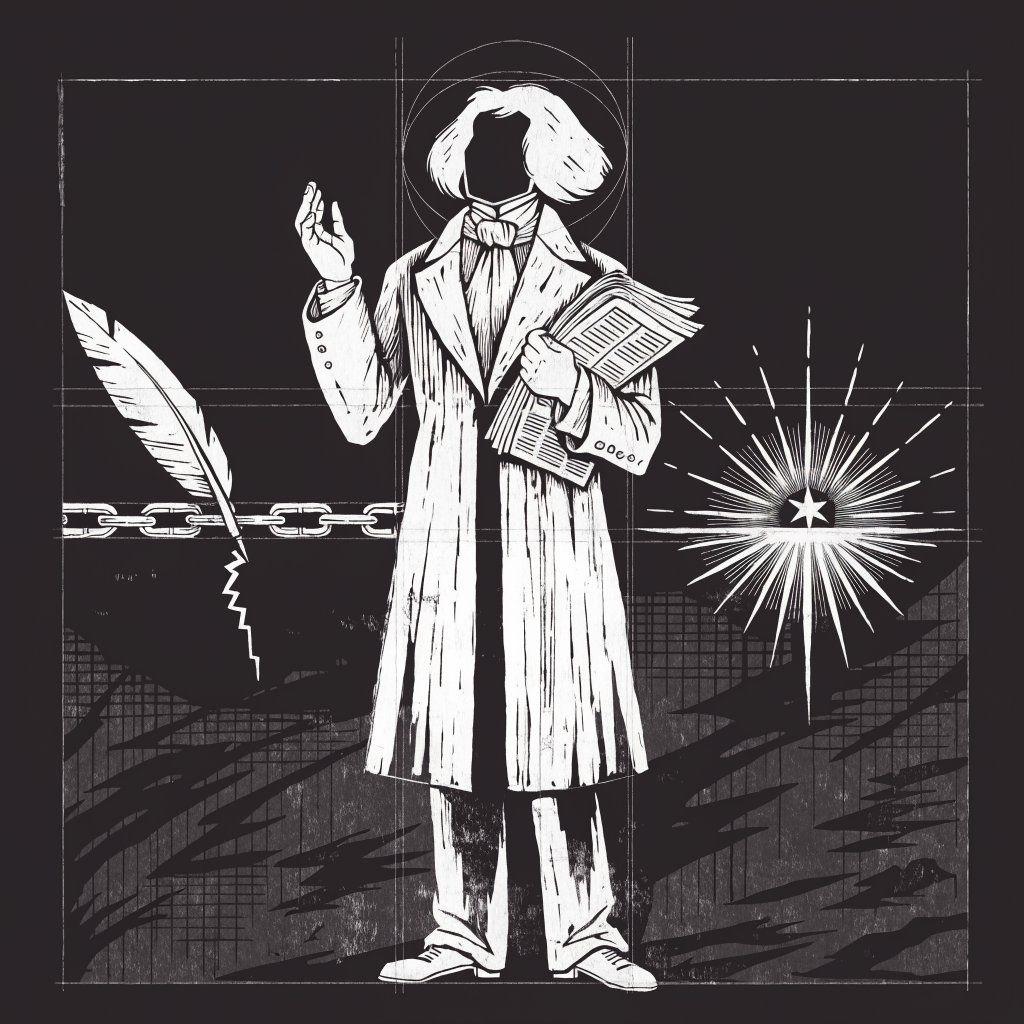
Frederick Douglass
c. 1818–1895 · Talbot County, Maryland
Launches the North Star
1847 · about age 29
Douglass came back from Britain in 1847 and used £500 from English supporters to start his own abolitionist paper, the North Star, in Rochester. His mentor William Lloyd Garrison advised against it. That was the first step in a split that became open in 1851 over the Constitution, one of the movement's best-known divisions. Saturn crossed its birth position three times that year. Douglass took on the full weight of his own voice: he set aside a mentor's cover and gained a press, a position and a platform of his own.
From the Psyborg Library (opens in a new tab)
The retreat: stepping back to choose a form
Others begin with a pause, stepping back long enough to see which form a life should take.
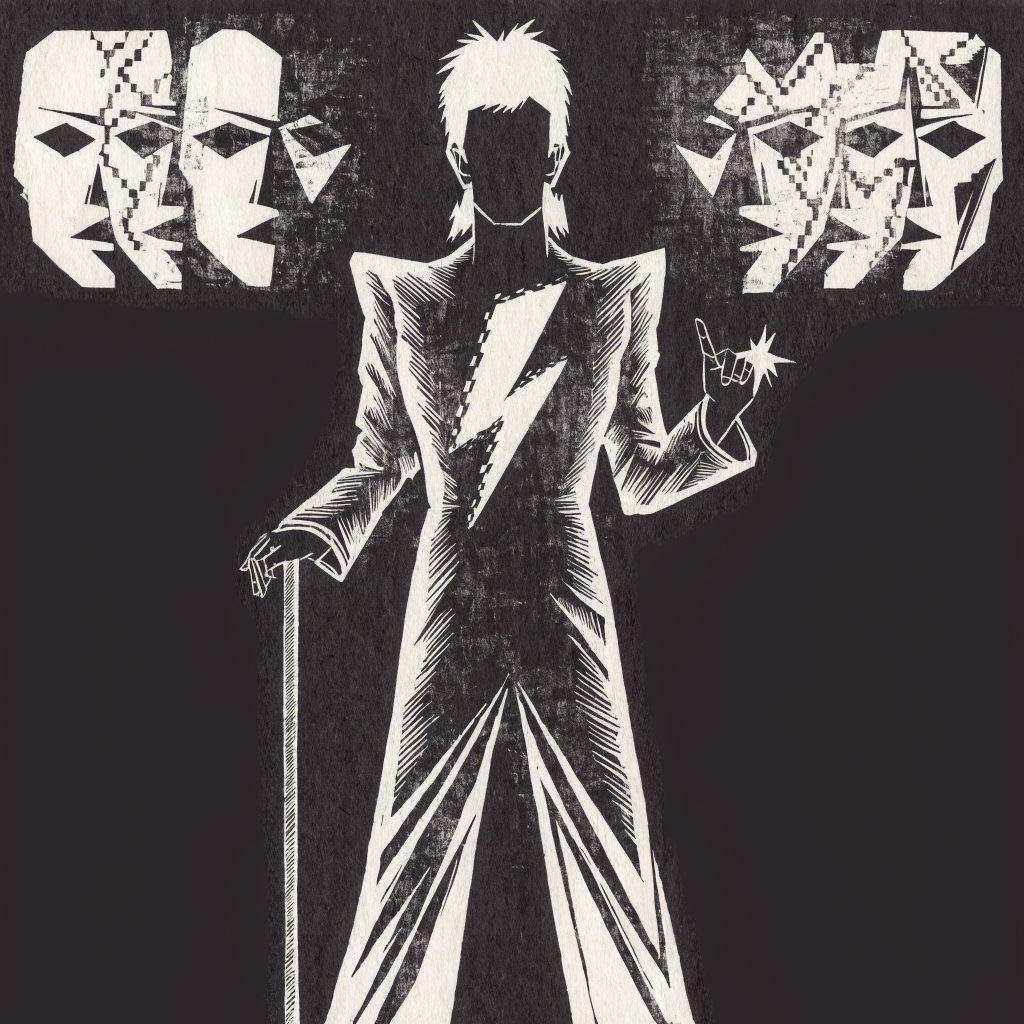
David Bowie
1947–2016 · Brixton, London
Moves to West Berlin
1976 · age 29
His Saturn return was exact that August, and by the autumn he had settled in Berlin. The reason on record is plain: to sober up and to have room to breathe. It was Saturn's limit used well: a boundary he drew himself, and a life built to fit inside it.
From the Psyborg Library (opens in a new tab)

Beyoncé
Born 1981 · Houston, Texas
Steps back, then releases 4 on her own label
2010 to 2011 · age 28 to 29
In January 2010, at 28, Beyoncé announced a break from music. She spent nine months travelling, visiting museums and the ballet. Her Saturn return was exact in October 2010, inside that pause, and Saturn's work is to clear a space before it builds. On 24 June 2011, at 29, she released 4, the first album she put out through Parkwood Entertainment, her own company. The ownership came after the stillness, and it arrived as a structure that was hers.
From the Psyborg Library (opens in a new tab)
The commitment: betting on one place
Sometimes the move is to stop searching and bet on one place, one role, one body of work.
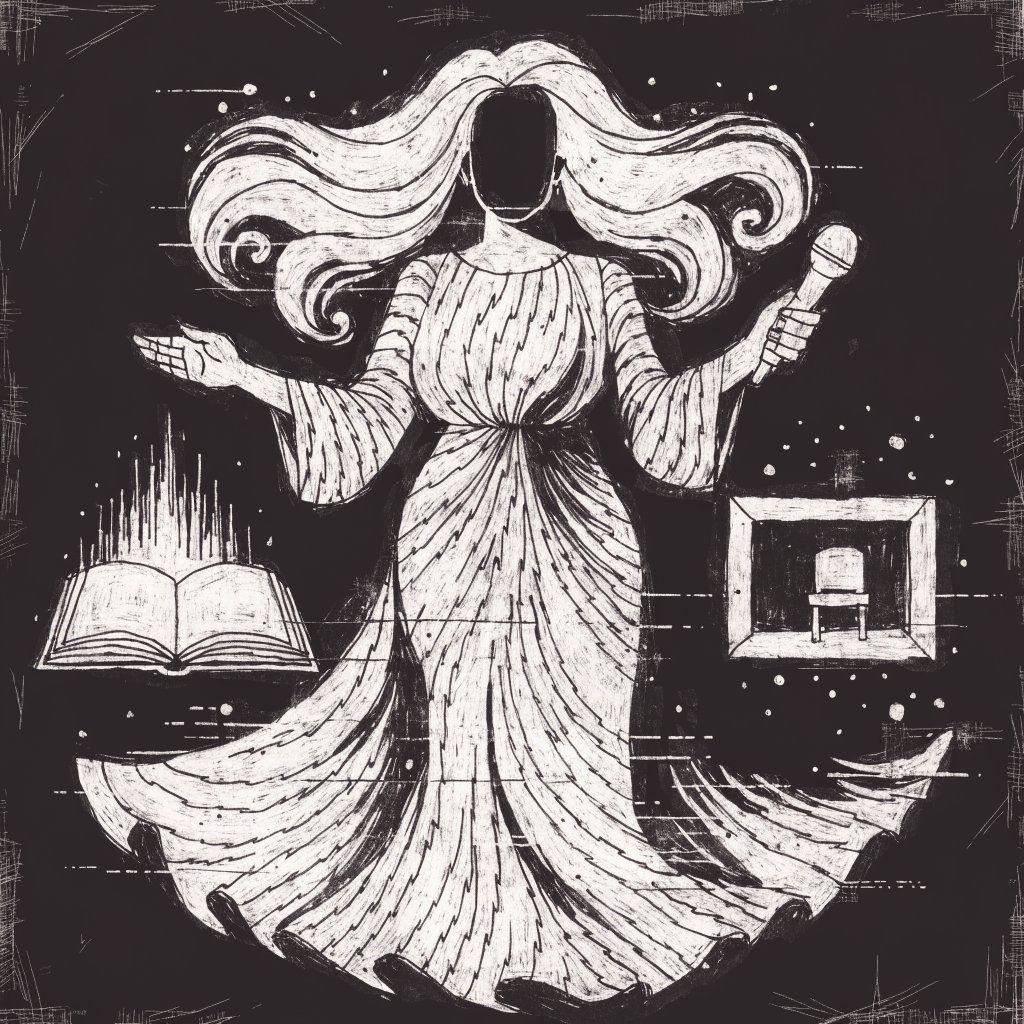
Oprah Winfrey
Born 1954 · Kosciusko, Mississippi
Moves to Chicago
1984 · age 30
She came to Chicago to host AM Chicago, a half-hour morning show with poor ratings. Her Saturn return had been exact in November 1983. Within months the show was first in its city, up from last. She took a hard seat, and it became the footing for what she built next.
From the Psyborg Library (opens in a new tab)
The teacher: meeting the mentor
Campbell observed that those who answer the call soon meet “the great figure of the guide, the teacher,”9 and Tarnas found the same at the Saturn return: in these years “one meets the mentor or model for one’s subsequent development.”10 For me, that mentor was Tarnas himself.
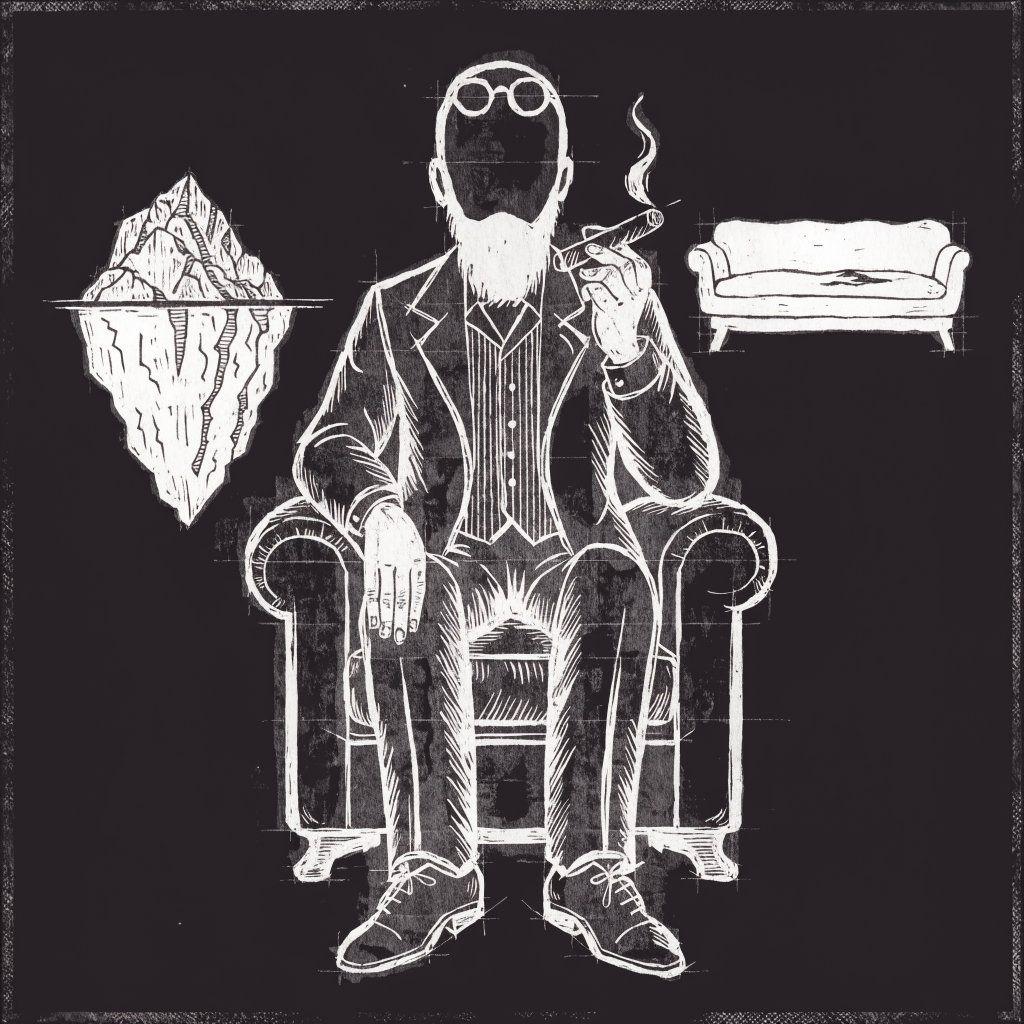
Sigmund Freud
1856–1939 · Freiberg, Moravia (now Czech Republic)
Goes to Paris to study with Charcot
1885 · age 29
Freud held a travelling fellowship in Paris from October 1885 to February 1886, studying under the neurologist Jean-Martin Charcot. He later said this was when he turned away from brain research and toward the study of illness of the mind. Tarnas lists the Paris meeting as one of his own examples of a Saturn return.11 The commitment took form the next year: he resigned his hospital post and opened a private practice.
From the Psyborg Library (opens in a new tab)
The second Saturn return
The second return arrives near 57 to 60. In Tarnas's research it brings culmination and closure to what the first return set in motion: the work, the central relationships, the basic stance toward life.12 Mortality draws closer. The question shifts from what you will build to what it served, and what it is for now.
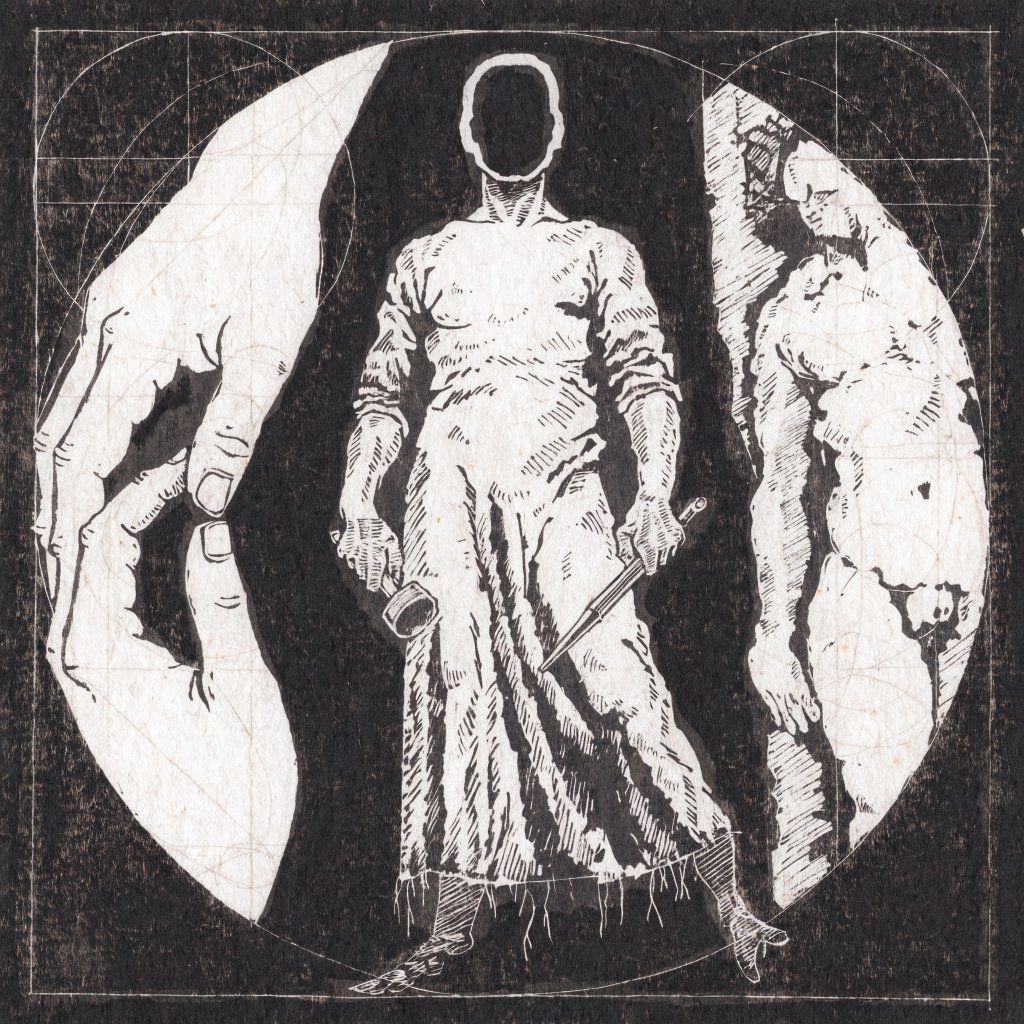
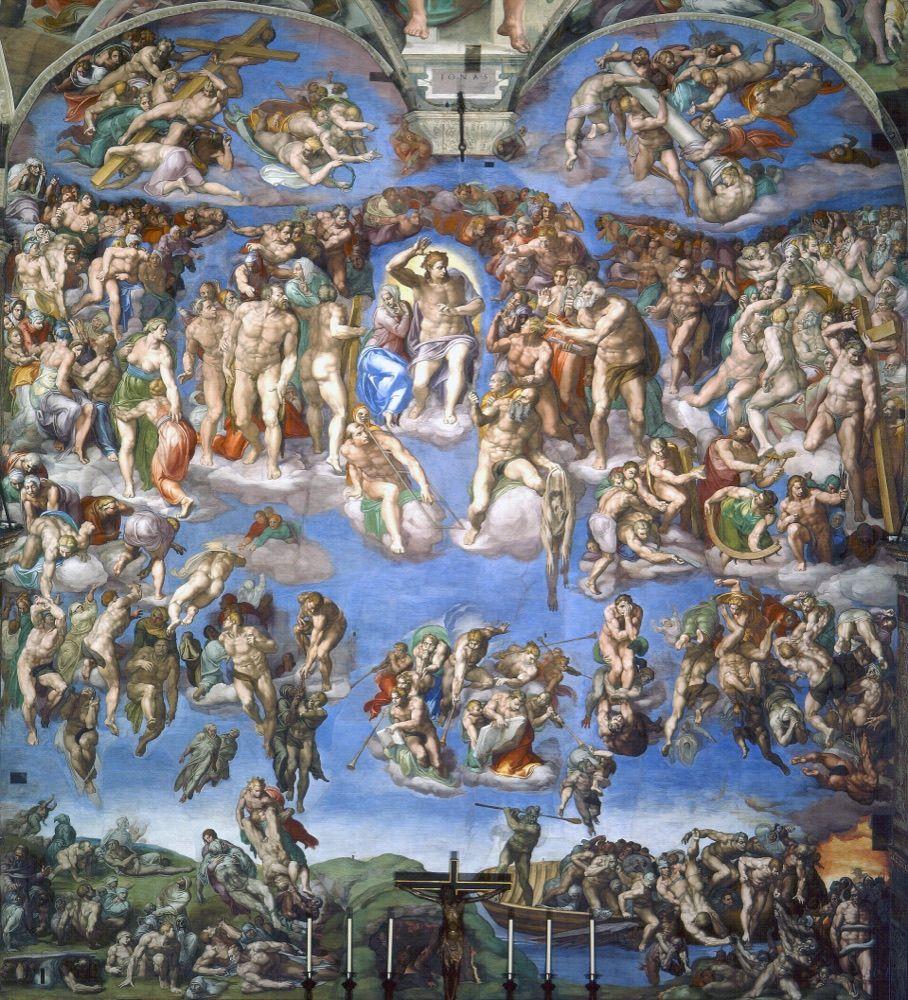
Michelangelo
1475–1564 · Caprese, Italy
Leaves Florence for Rome and The Last Judgment
1534 · near age 60
The Medici had pardoned him four years earlier for his defence of the Florentine republic. In 1534 he left Florence for good and went to Rome, where he was commissioned to paint The Last Judgment on the altar wall of the Sistine Chapel. His second Saturn return had been exact in July 1533. Saturn is the archetype of last things, and a second return asks what a whole life has been for. He answered with a wall about judgment and endings, painted from 1536 to October 1541.
From the Psyborg Library (opens in a new tab)
Rabindranath Tagore
1861–1941 · Calcutta, India
Renounces his knighthood
1919 · age 58
Tagore had been knighted in 1915. After the Jallianwala Bagh massacre in April 1919, he returned the honour. His second Saturn return ran from late 1918 to the middle of 1920. This was authority spent, for a second return asks what was earned and what was only given, and what Tagore held up in its place was a public refusal, from a man whose reputation was fully made.
From the Psyborg Library (opens in a new tab)
Compare your own Saturn return with any of these lives in Psyborg (opens in a new tab)
Michelangelo and Tagore show its two faces: one took on the largest work of his life, while the other surrendered an honour to keep faith with what his life had stood for, and neither was winding down. Tarnas noticed that this stage can also feel lighter, as if a long task had been finished and a burden set down.13 In older societies it was the doorway to elderhood: authority not as a title but as weight earned over time.
How to work with your Saturn return
My counsel comes in four movements.
Get clear on who you are. Not who you were told to be, and not who you were at 22. Write down what you keep returning to: the work you lose time in, the lives you quietly envy, the strands you dropped and miss. Mine were painting, fashion and astrology.
Build a mood board. Gather the images, words and examples of the life you are moving toward: places, work, people, objects. Seen together, a vague longing becomes a direction.
Start moving. Choose one concrete step this month and take it: a class, an application, a conversation, a first piece of work shown to someone.
A notebook and a pin board are enough to begin. This is also the work we built Psyborg for: a conversation about who you are, held with your own chart in view.
Don't wait it out. If you do not move in that direction now, it only gets harder. Saturn keeps time. Around 36 or 37 it reaches its next quarter-turn, a checkpoint that tends to test what you built at 29, or what you didn't.
The lives above suggest a few more disciplines.
- Commit to something real. Bowie chose a city and sobriety. Douglass chose a press. Winfrey chose a market most people would have passed over. The return asks for a real choice, not a perfect one.
- Build your own structure. Jobs, Douglass and Beyoncé each left someone else's house for their own: a company, a paper, a label.
- Read the weight. Whatever feels heavy is where Saturn is pointing: the job, the habit, the relationship you are only half inside.
- Find your teacher. Freud went to Paris for a winter and came back on a new path, and I found Tarnas. The return is a season for mentors who already carry the authority you are building.
- Enjoy the season. Just like the season of fall, the Saturn return is a precious moment in life. Enjoy the season for what it is! You will meet some of the most enduring influences and relationships in your life during this time, and the inevitable hardship will turn you away from things that no longer serve you if you are honest, courageous and attentive towards your life.
None of this is fate. The return names a season and the kind of work it rewards, and what you build in it is yours. So if you are in it now, don't wait for it to pass: decide what is worth enduring, and take your first step toward it this month. The people who come out of a Saturn return with a life of their own are rarely the ones who had it easy, but the ones who decided, somewhere in the middle of it, what their difficulty was for. I hope this season shows you what yours is for.
When is my Saturn return?
Your first Saturn return comes between the ages of 28 and 30, when Saturn reaches the exact place in the sky it held on the day you were born.
Saturn moves about 12 degrees a year, so your dates follow from your birth date, and people born a few months apart share nearly the same window. Use Psyborg to find exact dates from your birth chart.
For about four and a half months each year Saturn appears to move backward, so it may cross your birth point once or three times, over as long as nine months. The season runs from about a year before the first crossing to a year after the last.
How old are you at your Saturn return?
About 29 at the first, 59 at the second and 88 at the third, because Saturn takes 29.46 years to circle the Sun. Its uneven speed and its backward loops shift the exact age by a year or so either way.
| Saturn's position | Ages |
|---|---|
| First quarter-turn | 6 to 9 |
| First opposition | 13 to 16 |
| Last quarter-turn, first cycle | 21 to 23 |
| First Saturn return | 28 to 30 |
| Next quarter-turn | 35 to 38 |
| Second opposition | 43 to 46 |
| Last quarter-turn, second cycle | 50 to 53 |
| Second Saturn return | 58 to 60 |
| Third Saturn return | 87 to 89 |
Each quarter-turn comes roughly seven years after the last. Tarnas found these quarter-turns regularly marked by turning points and by encounters with authority and limits.14
Frequently asked questions
Is a Saturn return bad?
No. It is demanding, and it can be hard. But Saturn's pressure is also how authority, skill and lasting structure are made.
Can a Saturn return start at 27?
Given the deep transformation of a Saturn return, one can see the themes begin to emerge in their earliest stages by 27. At 29 the theme is highly pronounced. By 31 one will sense a shift as the foundation is established and a new chapter takes shape.
What is the difference between a Saturn return and a Saturn opposition?
At a return, Saturn comes back to the place it held at your birth. At an opposition, halfway through its 29-year cycle, it stands directly across the sky from that place. Generally one can expect the return to be a completion and introduction of a new cycle. The opposition features the same thematic energy with a different narrative structure emphasizing an integration of opposites.
Is a Saturn return the same as Sade Sati?
No. Sade Sati is a seven-and-a-half-year period in Vedic astrology, timed from Saturn's passage around the Moon in your birth chart, so it comes at different ages for different people. The Saturn return is timed from Saturn's own birth position and always comes near 29.
How is a Saturn return different from a Jupiter return?
Jupiter takes about 12 years to circle the Sun, so its returns come near 12, 24, 36 and every 12 years after. Saturn takes about 29 years, so its returns are rarer: near 29, 59 and 88. Where Saturn transits emphasize being forged by constraints, Jupiter transits feature being expanded by broadening horizons.
Notes
- Peter Thiel with Blake Masters, Zero to One: Notes on Startups, or How to Build the Future (Crown Business, 2014), chapter 1, “The Challenge of the Future.”
- Richard Tarnas, Cosmos and Psyche: Intimations of a New World View (Viking, 2006), chapter “Personal Transit Cycles.”
- Richard Tarnas, Cosmos and Psyche: Intimations of a New World View (Viking, 2006), chapter “Personal Transit Cycles.”
- Joseph Campbell, The Hero with a Thousand Faces, commemorative edition (Princeton University Press, 2004), pp. 54–55.
- Stanislav Grof, The Adventure of Self-Discovery (State University of New York Press, 1988), pp. 10–16.
- Richard Tarnas, graduate lectures, as described in Abeer Desai, “The Universal Growth Cycle,” Archai: The Journal of Archetypal Cosmology (forthcoming).
- Abeer Desai, “The Universal Growth Cycle,” Archai: The Journal of Archetypal Cosmology (forthcoming).
- Stanislav Grof, The Adventure of Self-Discovery (State University of New York Press, 1988), p. 16.
- Joseph Campbell, The Hero with a Thousand Faces, commemorative edition (Princeton University Press, 2004), pp. 66–67.
- Richard Tarnas, Cosmos and Psyche: Intimations of a New World View (Viking, 2006), chapter “Personal Transit Cycles.”
- Richard Tarnas, Cosmos and Psyche: Intimations of a New World View (Viking, 2006), chapter “Personal Transit Cycles.”
- Richard Tarnas, Cosmos and Psyche: Intimations of a New World View (Viking, 2006), chapter “Personal Transit Cycles.”
- Richard Tarnas, Cosmos and Psyche: Intimations of a New World View (Viking, 2006), chapter “Personal Transit Cycles.”
- Richard Tarnas, Cosmos and Psyche: Intimations of a New World View (Viking, 2006), chapter “Personal Transit Cycles.”